gwt-mosaic project – GWT/incubator/gwt-dnd put together…

There is a new framework on the GWT blockgwt-mosaic – which is basically a cleverly put together collection of widgets from GWT, gwt-incubator, and gwt-dnd. On the surface the showcase of the framework looks very similar to GWT, but soon enough you’ll realize the little but very important things it adds to GWT like more advanced dialogs, additional layouts, tool buttons, treetable, paging scroll table, etc. Since these widgets are based on already available and tested ones from Incubator and gwt-dnd, this new framework even now looks pretty good and is relatively stable.

It’s a very early version right now, but I think is worth following. It’s licensed under Apache 2.0.

Ext-GWT 1.1 is out

There is a new version (1.1) of Ext-GWT library available with all kinds of goodies – Grids, Bean Model/Factory,Web Desktop, Slate theme, Live Combo Box. Slick stuff and definitely a great framework that anyone starting in GWT needs to consider!

One thing I wish for is that Ext-GWT was better interoperable with native GWT widgets/layouts. But maybe it’s just wishful thinking on my part, since I also understand the complexity of getting RIA stuff work smoothly across the browsers and various hacks developers put into place to deal with cross browser issues.

GWT, Maven2, Eclipse – part2

Just wanted to finish my previous post on the Maven2 setup with GWT. Since Google/GWT doesn’t provide any maven central repositories you’d have to install them yourself into either your development maven repo or into your local maven repo. Below are the commands to do it (assuming Windows dev env and some path).

Continue reading

GWT, Maven2, and Eclipse – living happily together (Part 1)

I wanted to post some instructions for getting GWT compiler working with Maven2, at least the I way I use it in some of my gwt development. I hope developers using Maven for their build will find this useful, since unfortunately GWT  doesn’t support maven out of the box. There is a third party Maven2 plugin already available for GWT, however I personally find that using raw GWT compiler is rather more flexible. Continue reading

GWT wrapper for Dojo (Tatami) v. 1.2 is out

There is a new drop of Tatami project available . Tatami is a GWT wrapper for a famous Dojo javascript library. It looks pretty neat with some newly added widgets: Grid, Spinners, MD5 hash library.

One thing however I don’t understand is the licensing for Tatami project – it’s LGPL – versus typical BSD that Dojo uses or Apache 2.0 license that GWT uses, especially considering the fact that LGPL is really a rather gray area as related to compiled code, such the one that GWT compiler produces.

LombardiSoftware’s Blueprint upgrades to GWT 1.5

good folks at Lombardi Software’s Blueprint team posted their review of the migration to GWT 1.5 and what it means to performance of their project. Here are some interesting nuggets from the post:

  • …I was also surprised that converting longs to doubles made as big of an impact as it did.  We don’t have many usages of longs.  Most of them are a couple dozen timer instrumentation points but converting them made a noticeable difference.  The long emulation must be particularly slow…
  • …I would say that this shows we’re getting around a 10% reduction in time with a simple upgrade from GWT 1.4 to 1.5 and even an improvement on the Diagram.  This is a simple win as far as we’re concerned….
  • …The GWT compile time increased pretty dramatically from 55 seconds to 321 seconds which is almost six times longer.  I’m more than happy with the tradeoff between this and the new features we get with 1.5….
  • …The generated OBF code increased in size.  We went from 673,876 bytes to 748,574 bytes (+11%) in uncompressed size on our largest module.  The total application is about 36,000 lines of GWT compiled code (excluding comments and whitespace) and that doesn’t include double counting lines that are reused in multiple modules…

gwt-incubator – what’s in it?

gwt-incubator project is basically a gwt playpen area. It has a pretty good wiki with examples and descriptions. I just looked over the incubator trunk and compiled most of the demos and would like to share my summary of the widgets.

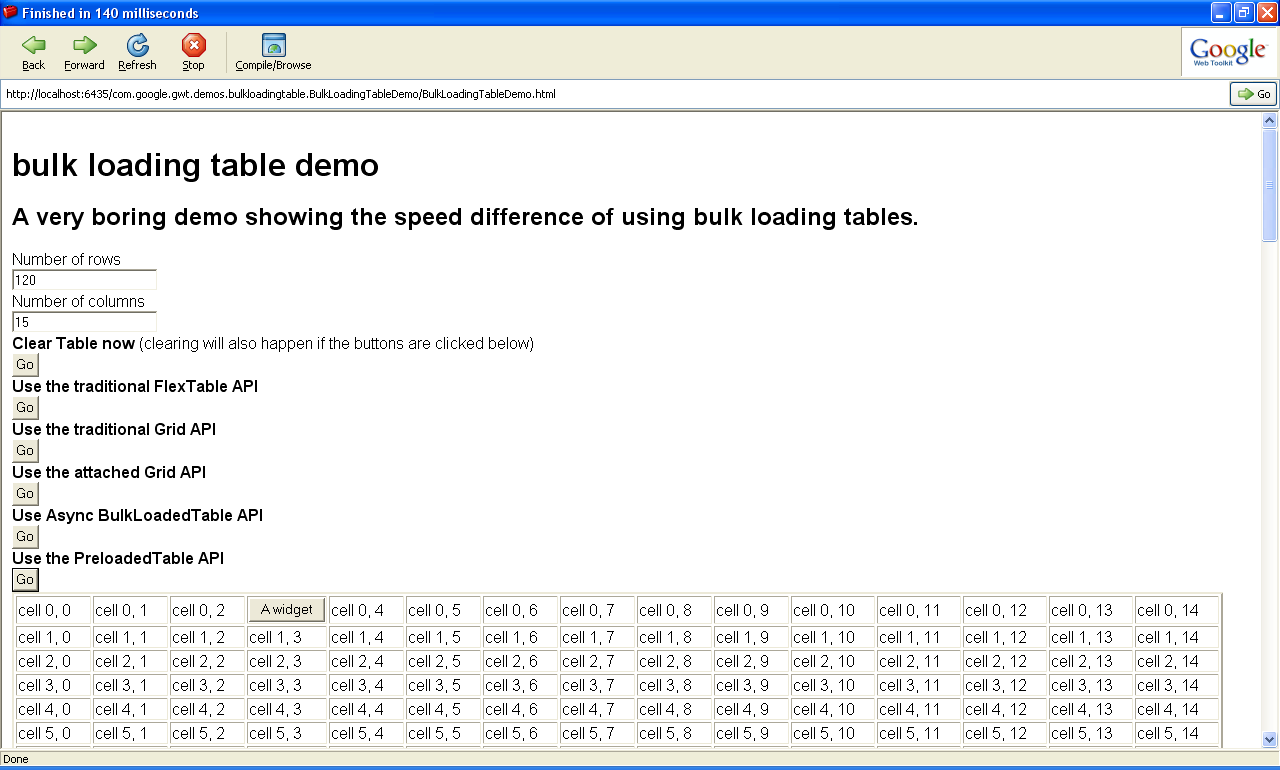
1) bulk loading table – basically a high performance HTML table generator based on innerHTML approach. No fancy demos, but here is the screenshot:

2) generator example – an example of a GWT generator. Nothing fancy but educational.

3) DatePicker – a pretty slick GWT calendar widget

4) Dropdown listbox – some kind of a new widget based a some newly prototyped GWT event model (it seems):

5) FastTree – again, another bulk generator this time for trees. Pretty neet and fast:

6) LogginDemo – basically an enhanced version of GWT logger for the browsers.

7) Paging scroll table and Scroll table – sophisticated grid/table widget supporting editing, column resizing, paging etc.

8) Pinned Panel – a neat sliding panel type widget with the panel capable of rolling from a side of the screen:

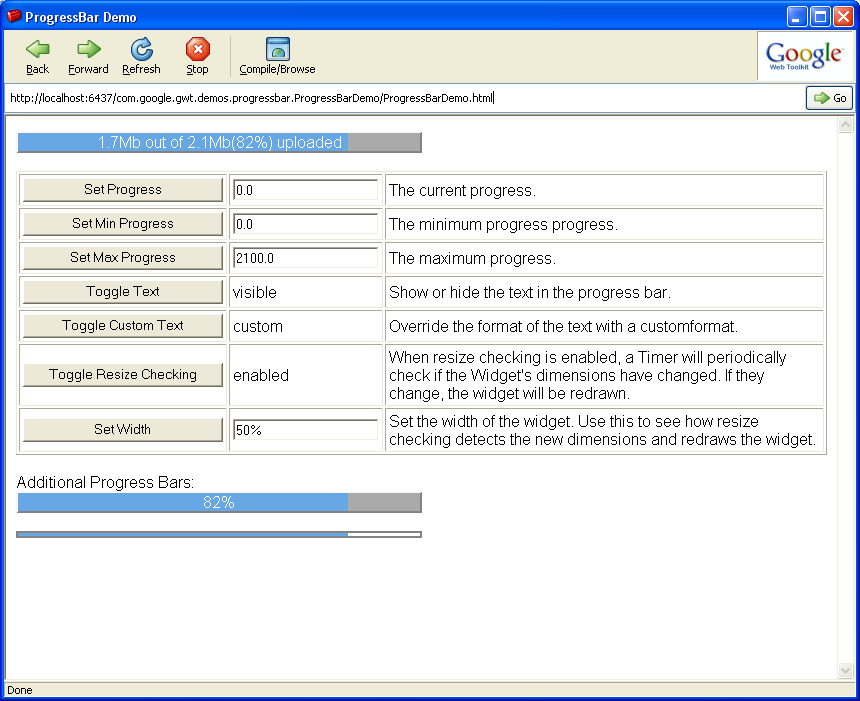
9) Progress bars – the oft requested GWT feature but for some reason missing from the core GWT:

10) Slider Bar – a powerful and sophisticated GWT slider implementation:

11) Spinners – anything non-visual that can spin, can be spinned :). pretty interesting, IMO:

12) Style injector/Immutable Resource Bundle – injecting CSS into GWT compilation result using annotations, and writing code within CSS to customize for different browsers or what not.

13) YouTube widget (or any Flash object) – embed YouTube videos or whatever other objects using GWT.

Design a site like this with WordPress.com
Get started